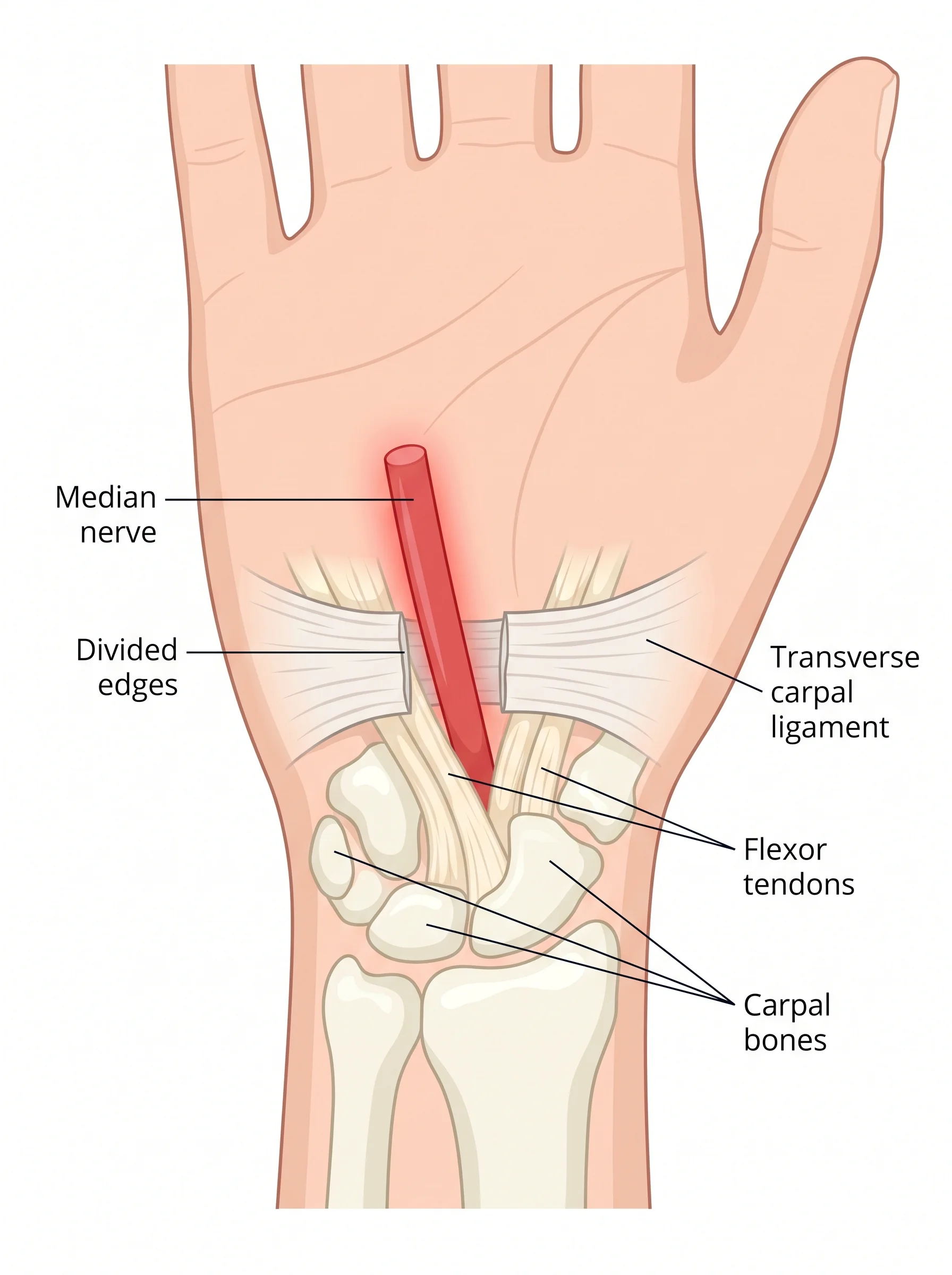
Carpal tunnel release is a procedure that relieves pressure on the median nerve at the wrist by opening the ligament that forms the roof of the carpal tunnel. Dr. Cole performs carpal tunnel release in Memphis for carpal tunnel syndrome that does not improve with splinting, injections, and activity changes.
Jeff Cole performs carpal tunnel release in Memphis when it is the right step, and reviews every alternative with you first.
What is Carpal Tunnel Release?
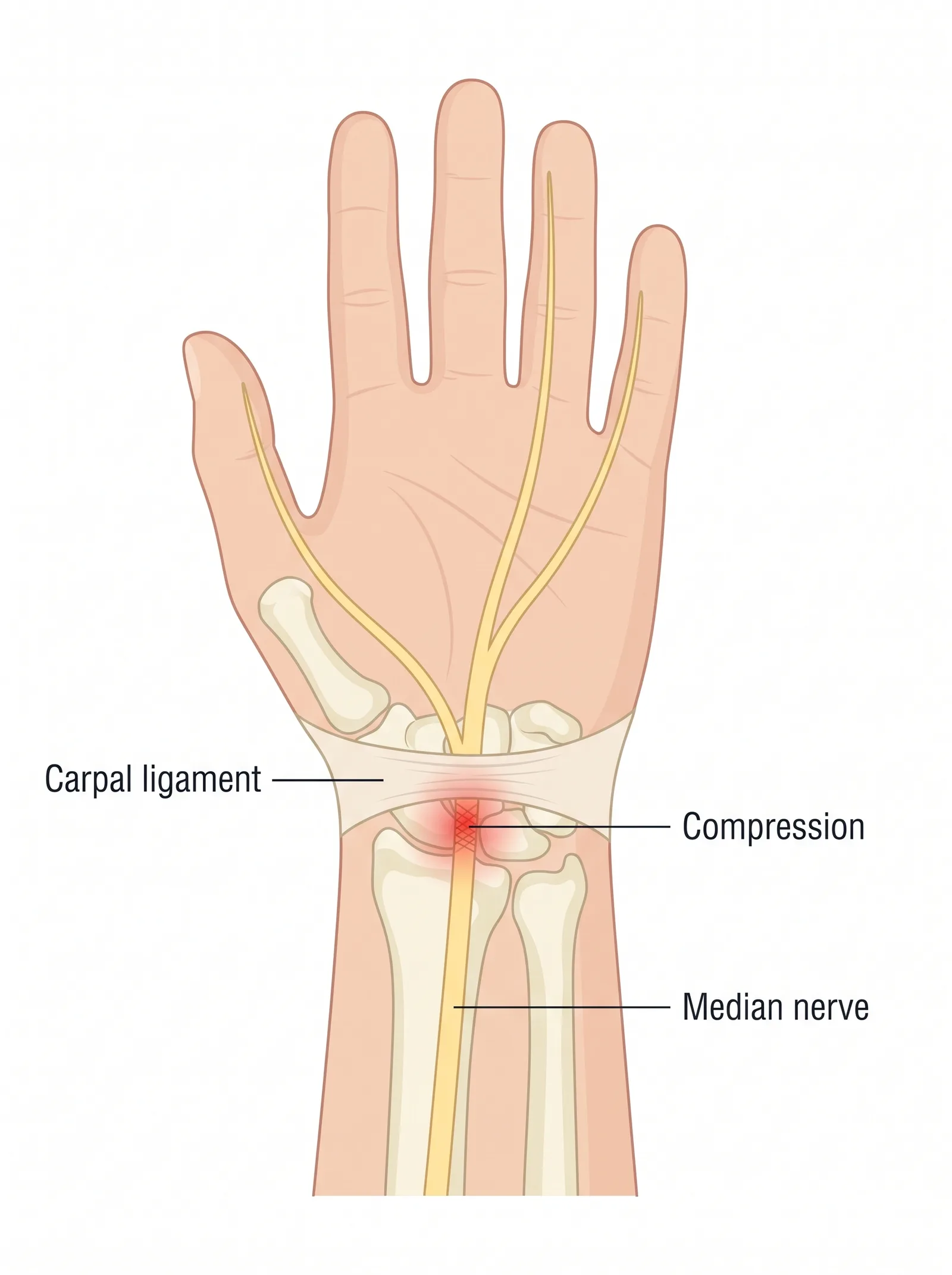
Carpal tunnel syndrome is pressure on the median nerve, a nerve that carries feeling to the thumb and most fingers, as it passes through the carpal tunnel at the wrist.
When the pressure is not relieved, it causes numbness, tingling, and weakness.
Carpal tunnel release opens the transverse carpal ligament, the band that forms the roof of the tunnel. Cutting this band gives the nerve more room and takes the pressure off.
The procedure is common and is usually done as an outpatient, meaning you go home the same day. It is often done with local or regional anesthesia, so only the arm is numbed.
What happens during Carpal Tunnel Release, step by step?
There are two main techniques.
In open release, the surgeon makes a small incision in the palm to see and divide the ligament directly. In endoscopic release, the surgeon uses a small camera through one or two tiny incisions to divide the ligament from the inside. Both take pressure off the median nerve. Your physician will explain which approach fits your anatomy and preferences. The surgery itself usually takes well under an hour.
What is recovery like after Carpal Tunnel Release?
Many people notice night numbness ease soon after surgery, while grip strength and any daytime numbness improve more gradually.
Light hand use often resumes within days, and return to fuller activity commonly takes a few weeks to a couple of months, according to general guidance from the American Academy of Orthopaedic Surgeons. These are ranges, not promises. If the nerve was compressed for a long time, some numbness may take longer to recover or may remain. Your physician and therapist will guide your return to work and activity.
Read the full guide to preparing for surgery →
Your own recovery instructions come from the office and are specific to you. This page describes the general course, not a plan to follow.
What are the treatment options?
- 01A night wrist splint to keep the wrist straightA night wrist splint to keep the wrist straight.
- 02Activity changes and breaks from repeated gripping or vibrationActivity changes and breaks from repeated gripping or vibration.
- 03A corticosteroid injection, an anti-inflammatory medicine placed near the nerveA corticosteroid injection, an anti-inflammatory medicine placed near the nerve.
- 04Hand therapy and nerve-gliding exercisesHand therapy and nerve-gliding exercises.
- 05Carpal tunnel release is considered when these steps do not hold, when numbness is constanCarpal tunnel release is considered when these steps do not hold, when numbness is constant, or when nerve testing shows the nerve is being damaged.
What do patients ask most?
Will I be put fully to sleep?+
How soon can I use my hand?+
Will the numbness fully go away?+
Is open or endoscopic release better?+
Fellowship trained at Washington University, Barnes-Jewish Hospital - St. Louis, MO (Surgery of the Hand & Upper Extremity). Sees patients in Memphis.
About Dr. Cole →