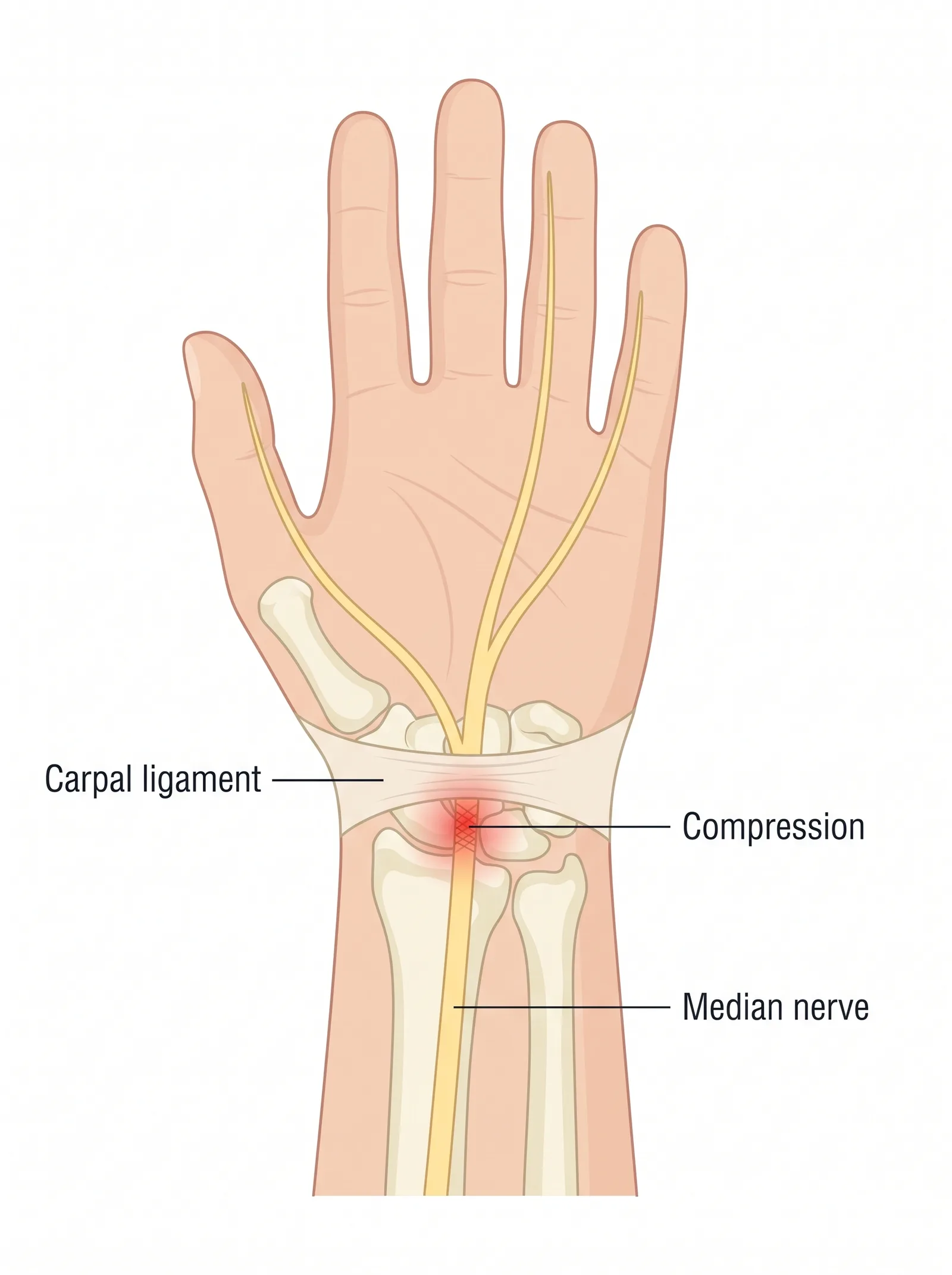
Carpal tunnel syndrome is pressure on the median nerve at the wrist, causing numbness, tingling, and hand weakness. Dr. Cole evaluates and treats carpal tunnel syndrome in Memphis, starting with night splinting, activity changes, and injections, and offering carpal tunnel release surgery when nerve pressure does not ease with non-surgical care.
Jeff Cole diagnoses and treats carpal tunnel syndrome in Memphis, from the first visit through recovery.
What is Carpal Tunnel Syndrome?
The carpal tunnel is a narrow passage on the palm side of your wrist.
The median nerve, a nerve that carries feeling to your thumb and most fingers, runs through it along with the tendons that bend your fingers. When the tunnel becomes crowded or swollen, the nerve is squeezed.
That pressure shows up as numbness or tingling in the thumb, index, and middle fingers, often at night or while holding a phone or steering wheel. Many people shake the hand to wake it up. Over time, the grip can weaken and small tasks like buttoning a shirt become harder.
Carpal tunnel syndrome usually builds slowly. Repetitive hand use, pregnancy, thyroid changes, and diabetes can all raise the risk. Catching it earlier gives non-surgical care a better chance to help.
How is Carpal Tunnel Syndrome diagnosed, and what does the visit involve?
Diagnosis starts with your history and a hand exam.
Your physician may tap over the nerve or bend the wrist to see if symptoms appear. A nerve conduction study, a test that measures how well the median nerve sends signals, can confirm the diagnosis and show how much the nerve is affected. An ultrasound may be used to look at the nerve. These tests also help rule out other causes of numbness, such as a pinched nerve in the neck.
What is recovery like for Carpal Tunnel Syndrome?
Non-surgical care is often tried for several weeks first.
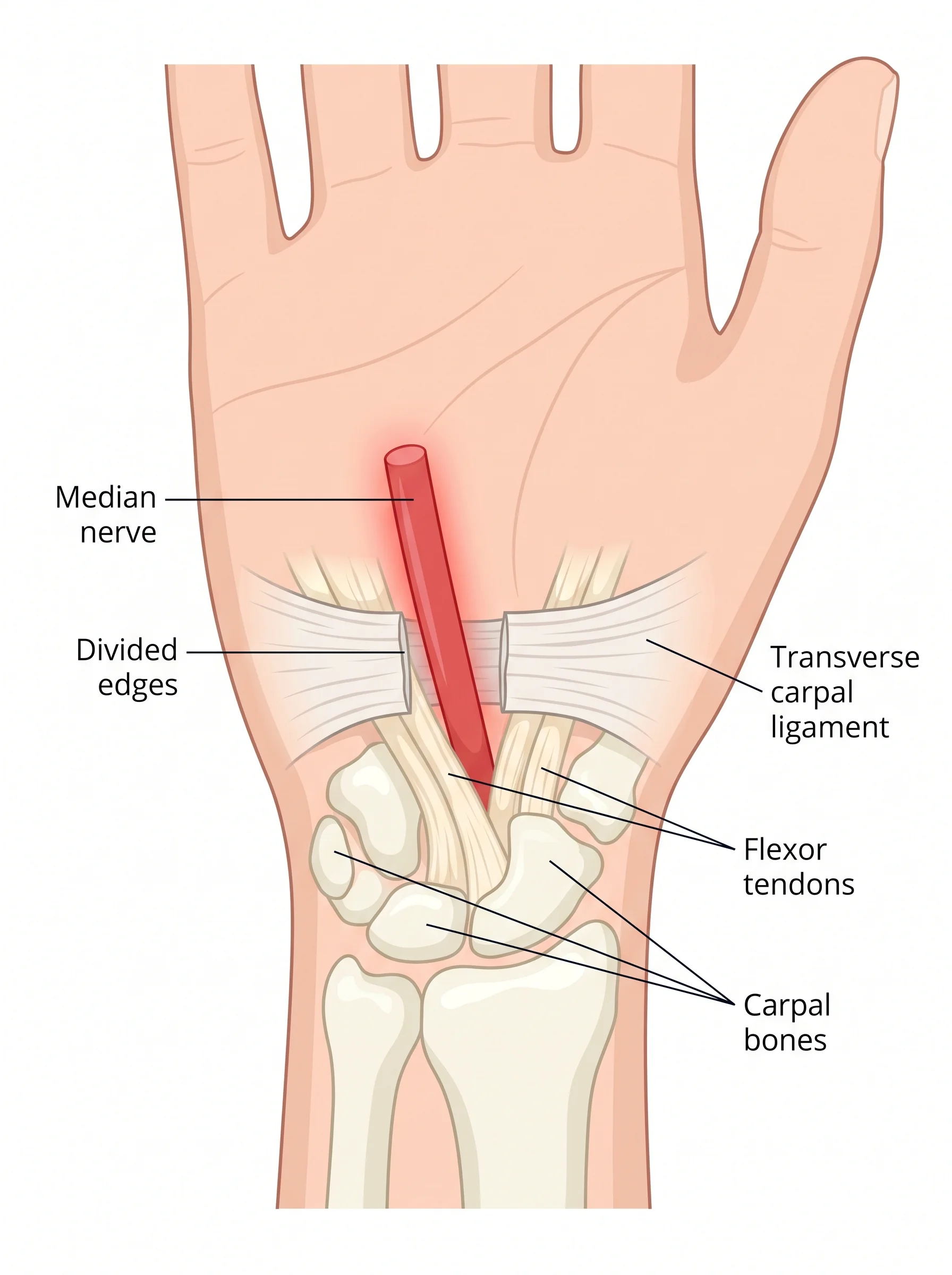
If symptoms are mild to moderate, splinting and an injection help many people, though relief can be temporary. If nerve testing shows moderate to severe changes, surgery tends to give more lasting relief. Your physician will explain what your specific test results suggest.
What are the treatment options?
- 01A wrist splint worn at night keeps the wrist straight so the nerve has more roomA wrist splint worn at night keeps the wrist straight so the nerve has more room.
- 02Activity changes and breaks from repeated gripping or vibrationActivity changes and breaks from repeated gripping or vibration.
- 03A corticosteroid injection, an anti-inflammatory medicine placed near the nerve, to calm sA corticosteroid injection, an anti-inflammatory medicine placed near the nerve, to calm swelling.
- 04Hand therapy, guided exercises and nerve-gliding movementsHand therapy, guided exercises and nerve-gliding movements.
- 05Carpal tunnel release, a surgery that opens the roof of the tunnel to take pressure off thCarpal tunnel release, a surgery that opens the roof of the tunnel to take pressure off the nerve, is considered when symptoms continue, when numbness is constant, or when nerve testing shows the nerve is being damaged.
What do patients ask most?
Does carpal tunnel syndrome go away on its own?+
Is surgery the only real fix?+
What happens if I wait too long?+
Can I keep working with carpal tunnel syndrome?+
Fellowship trained at Washington University, Barnes-Jewish Hospital - St. Louis, MO (Surgery of the Hand & Upper Extremity). Sees patients in Memphis.
About Dr. Cole →