Thumb CMC arthritis is wear of the joint at the base of the thumb. It causes pain with pinching and gripping, such as opening jars or turning keys. Most people improve with splints, activity changes, and hand therapy. When pain limits daily life, several procedures can rebuild a comfortable, working thumb.
Jeff Cole diagnoses and treats thumb (cmc) arthritis in Memphis, from the first visit through recovery.
What is Thumb (CMC) Arthritis?
Thumb CMC arthritis is one of the most common types of arthritis in the hand.
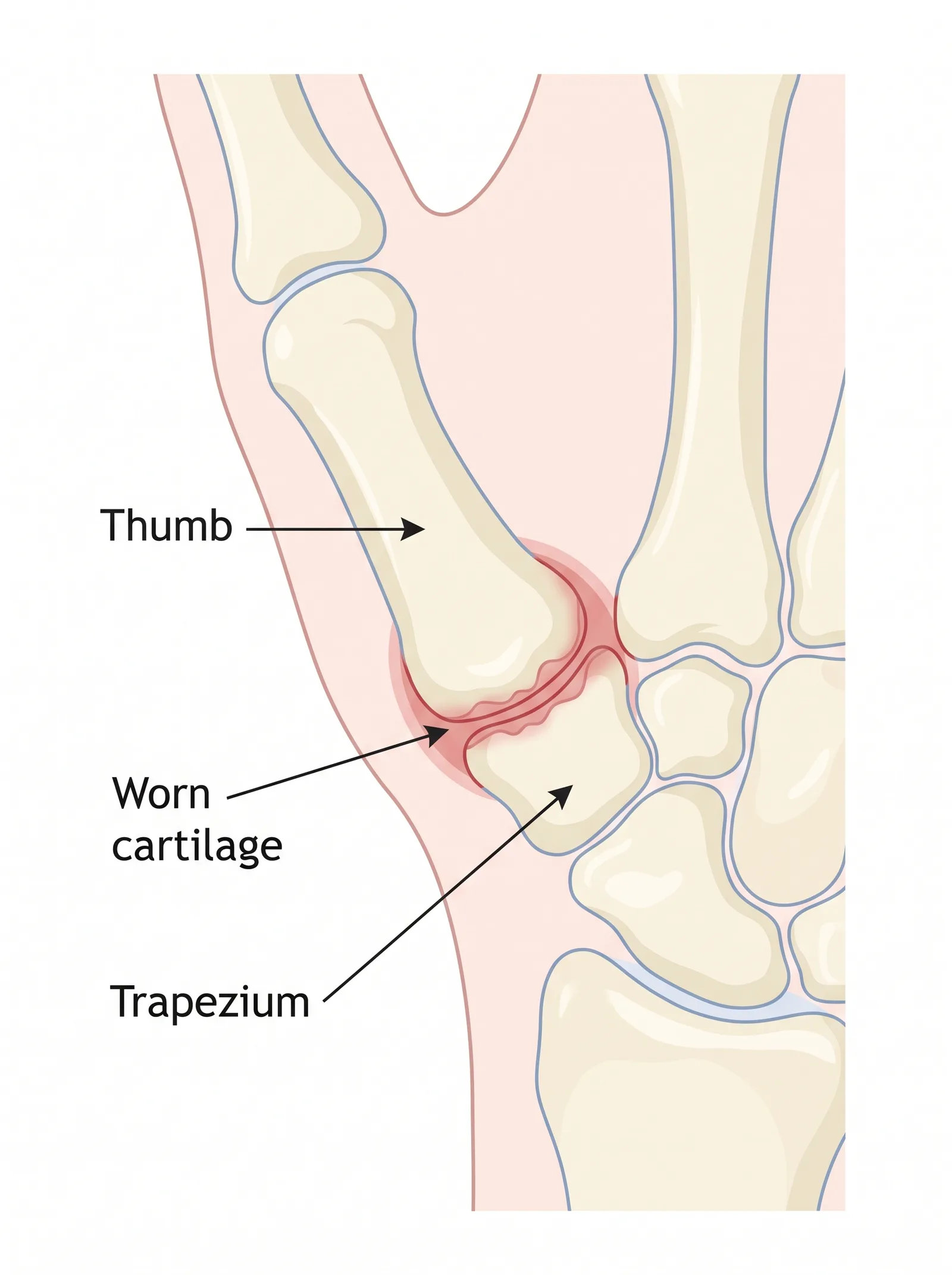
CMC stands for carpometacarpal, which is the joint at the base of the thumb where the thumb meets the wrist. This joint is special. It is shaped like a saddle, which lets the thumb move in many directions and pinch against the fingers. That mobility is what makes the human thumb so useful, but it also puts a lot of stress on the joint over a lifetime.
Arthritis means the smooth cartilage that caps the ends of the bones has worn down. Cartilage is the slick, cushioning surface that lets a joint glide. When it wears away, the bones rub, which causes pain, swelling, and stiffness. Over time, the joint can loosen and the base of the thumb can start to look more prominent or bumpy.
Thumb CMC arthritis is more common with age and is more common in women. A past injury to the joint, or a job or hobby with heavy pinching and gripping, can add to the wear. Sometimes it runs in families. It is a wear-and-tear condition, not something a person caused by using the hand.
The condition ranges from mild, with occasional soreness, to advanced, with pain that limits everyday tasks. The reassuring part is that most people are helped a great deal by simple, non-surgical care, and that even advanced cases have good procedure options. For a shorter overview, see our thumb arthritis service page, which links back to this full guide.
What are the symptoms of Thumb (CMC) Arthritis, and when should you see a specialist?
The main symptom is pain at the base of the thumb, on the side near the wrist.
Common patterns include the following.
- Pain when pinching, such as turning a key, opening a jar, or pinching a zipper. - Aching at the base of the thumb after use, which may linger. - Weakness in the grip or pinch, so things slip or feel hard to hold. - Stiffness and, over time, less motion in the thumb. - A bump or a wider look at the base of the thumb as the joint changes.
Early on, the pain may come only with heavy pinching and then settle with rest. As arthritis advances, pain may come with lighter tasks and may be present even at rest.
It is reasonable to see a specialist when thumb-base pain keeps interfering with daily tasks, when a splint or over-the-counter medicine is not enough, or when the thumb is getting weaker. You do not need to wait until the pain is severe. Simple treatments often work best when started before the joint is badly worn, and a specialist can help you protect the joint and stay active.
How is Thumb (CMC) Arthritis diagnosed, and what does the visit involve?
Diagnosis usually combines a conversation, an exam, and an X-ray.
Dr. Cole will ask where the pain is, what brings it on, how it affects pinching and gripping, and what you have already tried.
The exam is gentle. Dr. Cole will press on the joint at the base of the thumb and may perform a simple test that gently loads and rotates the joint to see if it reproduces your pain. Grip and pinch strength are checked, and the shape and motion of the thumb are examined. This helps grade how advanced the arthritis is.
An X-ray is commonly used. It shows the joint space, any narrowing where cartilage has worn, and any bone spurs or changes in alignment. The X-ray helps match the treatment to the stage of arthritis. Advanced imaging like MRI is rarely needed for this condition. The office will explain what your X-ray shows in plain terms.
[CTA: Thumb-base pain slowing you down? Book a visit with the office of Jeff Cole at (901) 621-7091.]
What does treatment for Thumb (CMC) Arthritis involve?
There is more than one procedure for thumb CMC arthritis.
Dr. Cole will match the choice to your joint, your goals, and how you use your hands. The common options share a goal: to remove the painful, worn joint surface and create a comfortable, stable thumb.
Before the day. You and Dr. Cole choose the procedure together after reviewing your X-ray, your exam, and what matters most to you. The office reviews health, medicines, and blood thinners. Insurance questions are answered by the office.
Anesthesia. These procedures may be done with regional anesthesia, which numbs the arm, sometimes with sedation, or with general anesthesia, which puts you fully asleep. The team will discuss what fits you.
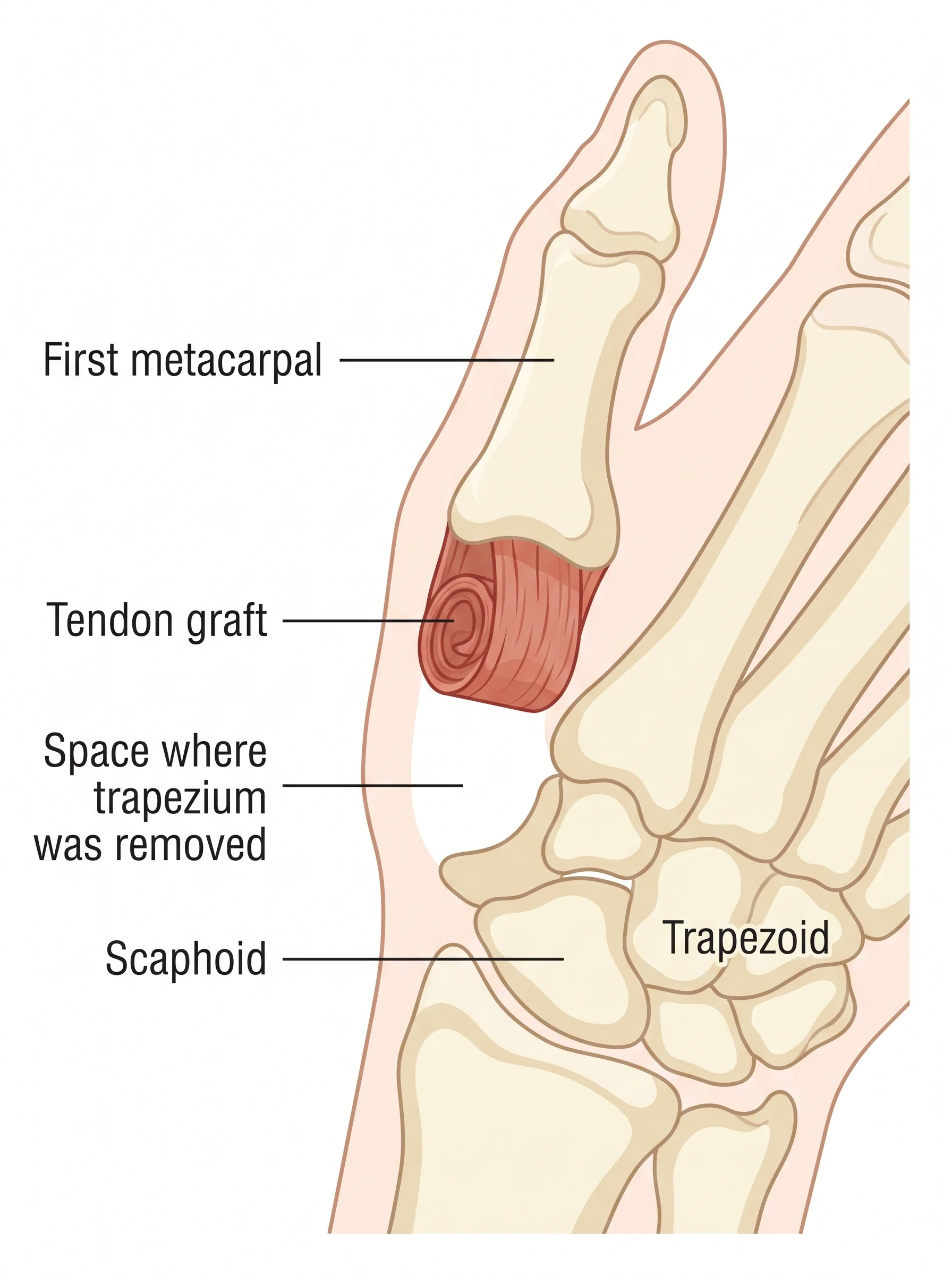
Trapeziectomy. One common approach removes a small wrist bone called the trapezium, which forms the worn side of the thumb saddle joint. Removing it takes away the bone-on-bone rubbing. This is often the core step.
Ligament reconstruction and tendon spacer. In many cases, after the trapezium is removed, Dr. Cole uses a nearby tendon to stabilize the thumb and to fill the space, which helps keep the thumb from settling. This is often described as ligament reconstruction and tendon interposition. It is done through the same incision.
Joint fusion. For some people, especially those who do very heavy work, fusing the joint, which means joining the bones so they no longer move, can create a strong, comfortable thumb base at the cost of some motion. Dr. Cole will say whether this fits you.
Closing and splinting. The incision is closed and the thumb is protected in a splint or cast. These are usually outpatient procedures, so you go home the same day.
What is the recovery timeline for Thumb (CMC) Arthritis?
Recovery from thumb-base surgery is gradual and is measured by milestones, not the calendar alone.
Because the thumb is rebuilt, healing takes patience. The ranges below are typical. According to general guidance from the American Academy of Orthopaedic Surgeons, recovery of comfortable pinch and grip after thumb-base surgery commonly takes several months, with improvement continuing for up to a year. These are ranges, not promises.
Week 0 to 4 (protect). The thumb is held in a cast or splint to protect the healing tissues. You keep the hand raised early to limit swelling and move the fingers that are free. The milestone is comfortable healing with the thumb protected.
Week 4 to 8 (start moving). The cast or splint is often adjusted, and hand therapy usually begins. You start gentle thumb motion under guidance. The milestone is increasing motion with less soreness.
Week 8 to 12 (build strength). Therapy adds strengthening. You begin light pinching and gripping and return to many daily tasks. The milestone is a thumb that can handle light activity comfortably.
Month 3 to 6 (return to activity). Strength and comfort keep improving. Many people return to most activities, including firmer gripping. The milestone is doing the tasks that were painful before with much less pain.
Month 6 to 12 (full recovery). Pinch strength and comfort can continue to improve for up to a year. The milestone is a durable, comfortable thumb for daily life.
Return to work depends on the job. Desk work may resume in a few weeks. Heavy manual work can take a few months. The office will plan a return that fits your healing.
How should you prepare for the procedure?
Thumb-base surgery needs a bit more planning because the hand is protected for several weeks.
Transportation. Arrange a ride home and rides to early follow-up visits, since you will not be able to use the hand normally at first.
Home setup. Prepare one-handed solutions ahead of time: easy-on clothing, slip-on shoes, pre-made meals, and everyday items within reach. A stable place to rest and elevate the arm helps.
Time off. Plan for several weeks of limited use of the operated hand. Discuss your specific job with the office so you can plan realistically.
Who to have available. Have someone available for the first days to drive, help with dressings and clothing, and manage tasks that need two hands. Ongoing help for the first week or two is useful.
Health steps. Follow guidance on medicines and blood thinners, and share a full list. If you smoke, cutting back around the time of surgery supports healing.
Which warning signs should you call about?
Call the office at (901) 621-7091 during for any of these.
- Fever, spreading redness, warmth, or drainage at the incision, which can signal infection. - Pain that gets worse rather than better after the first days. - A cast or splint that feels too tight, or fingers that are numb, pale, blue, or very cold. - New or worsening numbness or tingling in the thumb or fingers. - Swelling in the arm with calf pain or trouble breathing, which needs urgent care.
For a severe or fast-changing problem when you cannot reach the office, seek urgent or emergency care. It is always fine to call and ask.
What results can you expect from Thumb (CMC) Arthritis?
Surgery for thumb CMC arthritis has a good record for relieving pain.
According to general guidance from the American Academy of Orthopaedic Surgeons, most people have lasting pain relief and improved use of the thumb after surgery, though full strength returns slowly over months. These are ranges, not promises.
A useful way to set expectations: the main goal of these procedures is a comfortable, working thumb, not a return to a perfectly normal joint. Many people find they can pinch, grip, and open jars with far less pain than before. Grip and pinch strength usually improve, but the timeline is measured in months, and patience with therapy pays off. Dr. Cole will discuss the likely result for your joint and your goals.
What are the treatment options?
- 01Splints and bracesA brace that supports the thumb and wrist rests the joint and limits painful motion. Some people wear it during heavy tasks, others at night, and some for flares. A well-fitted splint is often the single most helpful non-surgical step.
- 02Activity changesSmall changes reduce joint stress. Built-up grips on pens and tools, jar openers, and lever handles instead of round knobs all lower the pinch force the thumb must produce. A hand therapist can suggest tools that fit your daily tasks.
- 03Hand therapyA therapist can teach exercises that strengthen the muscles supporting the thumb and can fit a custom splint. Strengthening the right muscles can take load off the worn joint.
- 04Anti-inflammatory medicineOver-the-counter medicine that lowers pain and swelling can help during flares. Confirm with the office or your regular doctor that it fits your health.
- 05Steroid injectionA shot of corticosteroid, a medicine that lowers swelling, placed into the joint can ease pain for weeks to months. It can be a good way to calm a flare or to delay or avoid a procedure. Relief varies from person to person. The office will explain what to expect.
What do patients ask most?
Will I lose motion or strength in my thumb?+
Can I avoid surgery?+
How long will I be in a splint or cast?+
Do injections work?+
Will the arthritis spread to other joints?+
Fellowship trained at Washington University, Barnes-Jewish Hospital - St. Louis, MO (Surgery of the Hand & Upper Extremity). Sees patients in Memphis.
About Dr. Cole →