Carpal tunnel syndrome is pressure on a nerve at the wrist that causes numbness, tingling, and weakness in the hand. Many people improve with splints and activity changes. When symptoms stay or the hand weakens, a short procedure to relieve the pressure can help. Care starts with the simplest steps first.
Jeff Cole diagnoses and treats carpal tunnel syndrome in Memphis, from the first visit through recovery.
What is Carpal Tunnel Syndrome?
Carpal tunnel syndrome is a common hand condition.
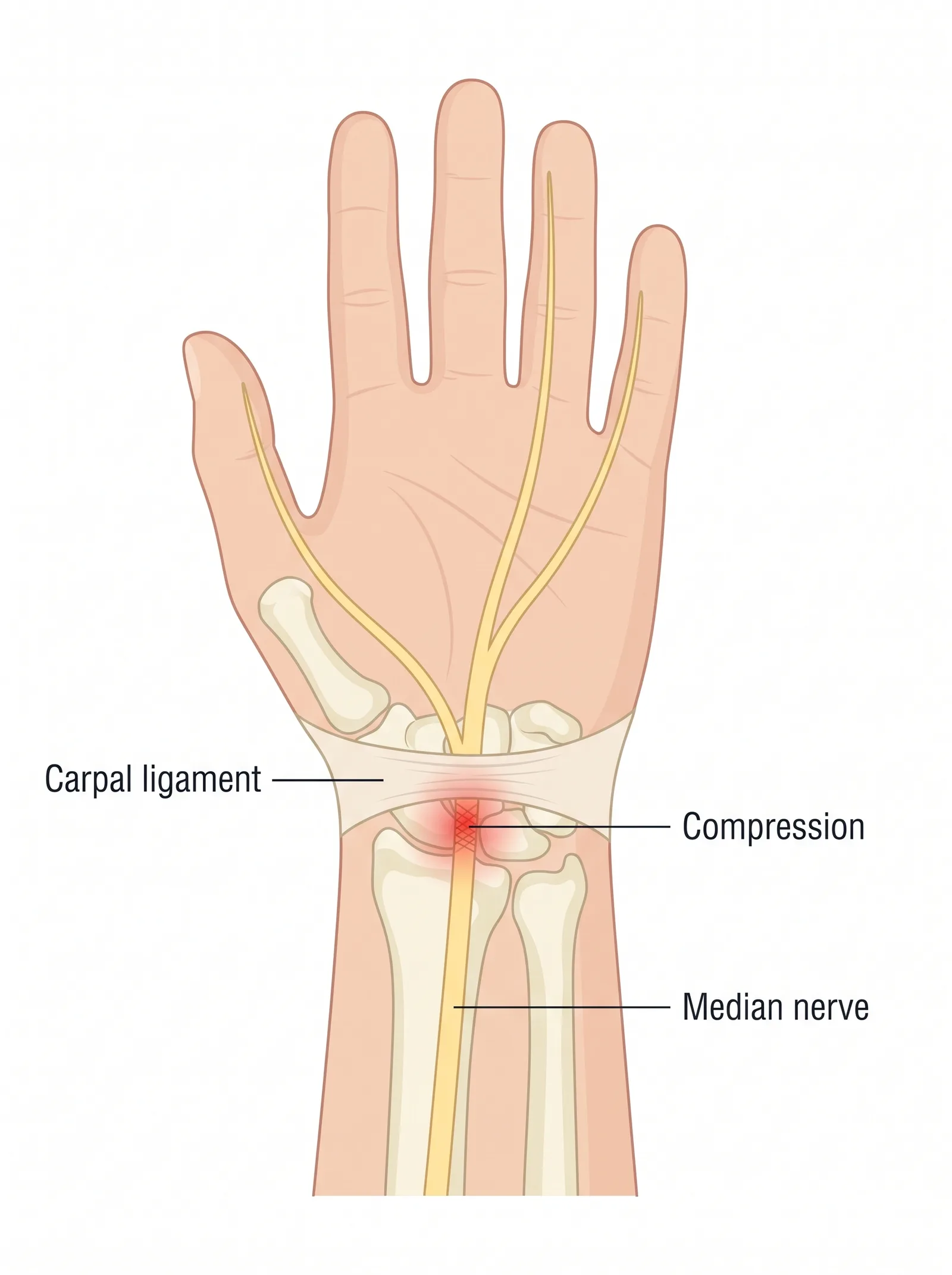
It happens when the median nerve, one of the main nerves to the hand, gets squeezed as it passes through the wrist. The carpal tunnel is a narrow space in the wrist. Its floor and sides are formed by small wrist bones. Its roof is a tough band of tissue called the transverse carpal ligament. The median nerve and nine tendons, which are cords that connect muscle to bone and let the fingers bend, all share this tight space. When the tissue inside the tunnel swells, or the space narrows, the nerve gets pressed. That pressure is what causes the symptoms.
The median nerve carries feeling from the thumb, the index finger, the middle finger, and part of the ring finger. It also sends signals to some of the muscles at the base of the thumb. This is why carpal tunnel syndrome tends to affect those fingers and the thumb, and why a weak grip or a clumsy pinch can show up over time.
Several things can raise the chance of carpal tunnel syndrome. These include work or hobbies with a lot of repeated hand and wrist motion, pregnancy, diabetes, thyroid problems, and arthritis in the wrist. Sometimes there is no clear cause. The condition is not a sign that a person did anything wrong. It is a mechanical problem in a small, crowded space.
This page explains what the condition feels like, how a specialist checks for it, and the full range of treatment from simple home steps to a procedure. If you want a shorter overview first, see our carpal tunnel service page, which links back here for the complete picture.
What are the symptoms of Carpal Tunnel Syndrome, and when should you see a specialist?
The most common early symptom is numbness or tingling in the thumb, index, middle, and part of the ring finger.
Many people first notice it at night. The hand may feel like it fell asleep. People often shake the hand or hang it off the bed to get relief. That night pattern is a classic clue.
During the day, symptoms may come on while driving, holding a phone, or reading. A pins-and-needles feeling, a burning feeling, or a sense that the fingers are swollen even when they look normal are all common. Some people drop things or feel that small tasks, like buttoning a shirt or picking up coins, have become harder. Over time, the muscle at the base of the thumb can shrink, which is called atrophy, and pinch strength can drop.
It is reasonable to see a specialist when any of the following is true:
- Numbness or tingling wakes you at night or keeps coming back during the day. - Symptoms have lasted more than a few weeks and are not improving with rest. - You notice weakness, dropping objects, or trouble with fine tasks. - The numbness is becoming constant rather than coming and going.
Constant numbness and thumb muscle weakness are more urgent signs. Nerves can recover well when pressure is relieved early. Waiting a long time with severe symptoms can make full recovery less certain. You do not need to wait for the hand to become weak before asking for help.
How is Carpal Tunnel Syndrome diagnosed, and what does the visit involve?
The visit usually starts with a conversation.
Dr. Cole will ask when symptoms happen, which fingers are involved, what makes them better or worse, and how the hand affects daily life and sleep. Your work, hobbies, and health history matter here, so it helps to think about these before the visit.
Next comes a hand exam. This is not painful. The exam may include gentle tests that put brief pressure on the nerve or bend the wrist to see if symptoms come on. Sensation in the fingers is checked, and the strength and size of the thumb muscles are compared side to side. These simple tests give a lot of information.
Sometimes a nerve test is ordered. This test is called electrodiagnostic testing. It has two parts. A nerve conduction study measures how fast and how strongly the nerve sends signals across the wrist. An electromyogram, or EMG, checks how the muscles respond. The test can confirm the diagnosis, show how much the nerve is affected, and rule out other nerve problems. It is done by a separate provider and takes about an hour.
Imaging is not always needed. An ultrasound or an X-ray may be used in some cases, for example to look at the size of the nerve or to check for arthritis or an old injury. The office will explain why a test is chosen and what it will show.
[CTA: Have hand numbness that will not settle? Request a visit with the office of Jeff Cole at (901) 621-7091.]
What happens during carpal tunnel release, step by step?
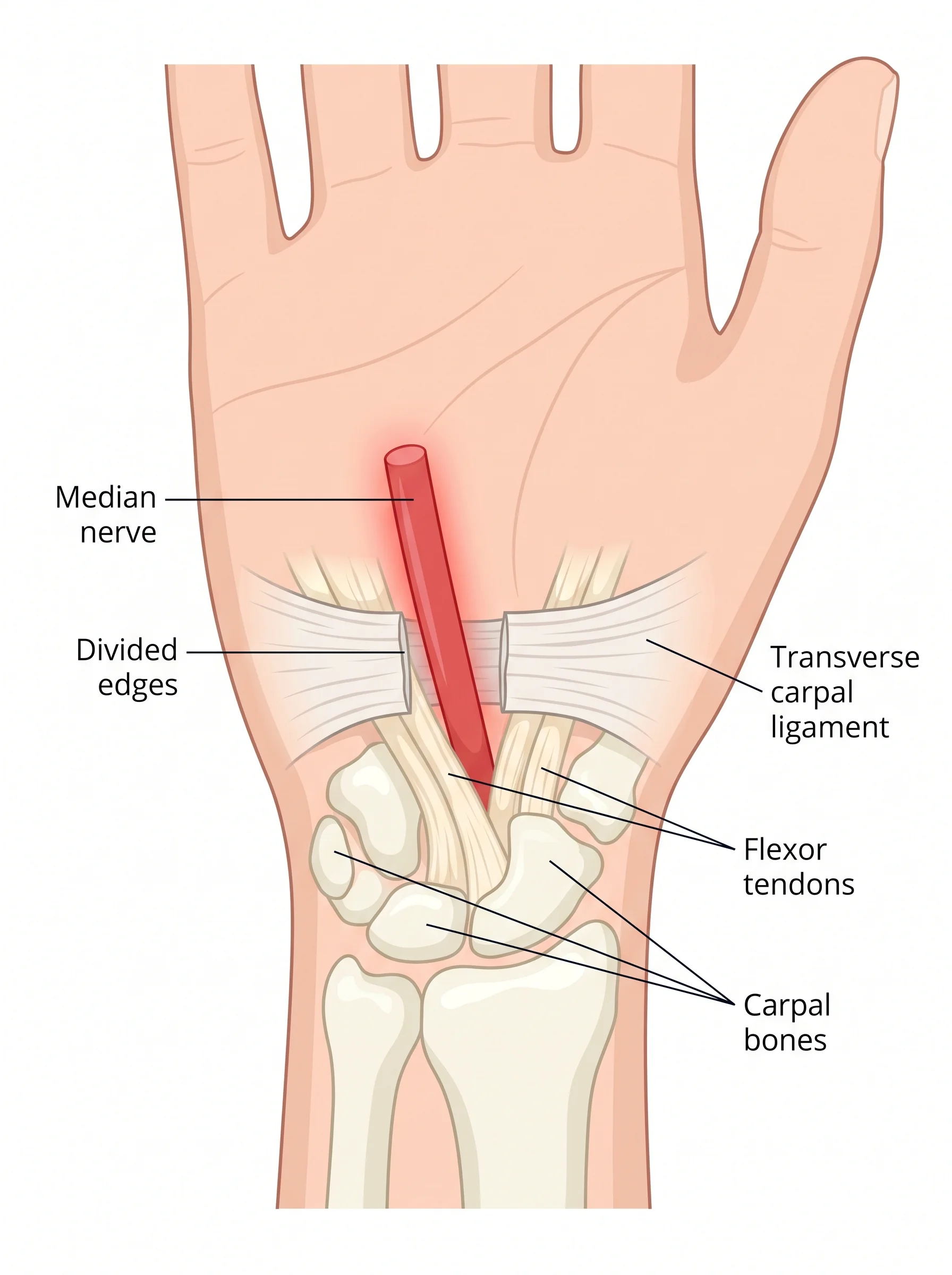
Carpal tunnel release is a procedure that cuts the transverse carpal ligament, the tough band that forms the roof of the tunnel.
Cutting this band makes the tunnel larger and takes pressure off the median nerve. Here is the usual sequence.
Before the day. You and Dr. Cole decide together that a release is the right step. The office reviews your health, your medicines, and any blood thinners. Insurance questions are answered by the office.
Anesthesia. Most releases are done with local anesthesia, which is numbing medicine placed in the wrist and palm, sometimes with light sedation to help you relax. General anesthesia, which puts you fully asleep, is usually not needed. You can often talk with the team during the procedure.
The release. There are two common approaches. In an open release, a small cut is made in the palm and the ligament is cut under direct view. In an endoscopic release, one or two smaller cuts are used along with a tiny camera to guide the cut. Both approaches relieve pressure on the same nerve. Dr. Cole will explain which approach fits your hand and why.
Closing. The skin is closed with stitches. A soft dressing is placed. The whole procedure often takes less than half an hour. It is done as an outpatient, which means you go home the same day.
Right after. You rest in a recovery area for a short time. Because the hand is numb, you will need a ride home. The office reviews how to care for the dressing and when to move the fingers.
What is the recovery timeline for Carpal Tunnel Syndrome?
Recovery is best measured by what your hand can do, not only by the calendar.
The dates below are typical ranges. According to general guidance from the American Academy of Orthopaedic Surgeons, most people return to light activities within a few days to a couple of weeks, with full recovery of strength taking longer. These are ranges, not promises.
Days 1 to 3 (protect and move). You keep the dressing clean and dry and keep the hand raised to limit swelling. You gently move the fingers right away. Night numbness often improves quickly, sometimes within the first days.
Week 1 to 2 (early use). Stitches often come out around 10 to 14 days. You use the hand for light daily tasks such as eating, writing, and light typing. The milestone here is comfortable finger motion and less soreness at the incision.
Week 2 to 6 (build up). As the palm heals, you add more grip and gradually return to heavier tasks. Soreness in the palm at the base of the hand, sometimes called pillar pain, is common and slowly fades. The milestone is a grip that feels stronger and less tender.
Month 2 to 3 and beyond (strength and comfort). Grip strength keeps improving. Numbness that was long-standing may take longer to settle, since nerves heal slowly. Full comfort with heavy or repeated tasks may take a few months. The milestone is returning to the activities that matter to you without the hand holding you back.
Return to work depends on the job. Desk work may resume within days to a week or two. Heavy manual work may take several weeks. The office will help you plan a return that fits your healing.
How should you prepare for the procedure?
A little planning makes recovery smoother.
Transportation. Arrange a ride home. You cannot drive right after the procedure because the hand is numb and bandaged.
Home setup. Set up items you use often within easy reach so you do not have to grip or lift with the healing hand. Loose, easy-to-put-on clothing helps. Prepare a few simple meals ahead of time.
Time off. Plan light duty for the first several days. Talk with the office about your specific job so you know what to expect.
Who to have available. It helps to have someone available for the first day to drive you, help with the dressing, and manage tasks that need two strong hands.
Health steps. Follow the office's guidance on medicines and blood thinners. Tell the office about all medicines and supplements you take. If you smoke, reducing or stopping around the time of the procedure can help healing.
Which warning signs should you call about?
Most recoveries are smooth.
Still, it is important to know what to watch for and who to call. For any of the following, call the office at (901) 621-7091 during .
- Fever, spreading redness, warmth, or pus at the incision, which can signal infection. - Pain that is getting worse rather than better after the first few days. - A dressing soaked with blood that does not stop with gentle pressure and raising the hand. - Numbness that becomes worse or new numbness in areas that felt normal. - Fingers that turn pale, blue, or very cold.
If you cannot reach the office and you have a severe or fast-changing problem, such as heavy bleeding, a very high fever, or signs of a serious reaction, seek urgent care or emergency care. When in doubt, it is always fine to call and ask.
What results can you expect from Carpal Tunnel Syndrome?
Carpal tunnel release has a long track record.
According to general guidance from the American Academy of Orthopaedic Surgeons, most people have good and lasting relief of symptoms after surgery, and serious complications are uncommon. Night symptoms often improve first, while strength and long-standing numbness improve more slowly. These are ranges, not promises, and your result depends on how long and how severe the nerve pressure was before treatment.
A helpful way to think about it: the procedure relieves the pressure, and then the nerve recovers at its own pace. A nerve that was pressed only mildly and for a short time tends to recover more fully than one that was pressed hard for a long time. This is one reason getting checked early matters. Your own outcome will be discussed in plain terms based on your exam and any nerve testing.
What are the treatment options?
- 01Wrist splintingA splint holds the wrist in a neutral, straight position. This opens up the tunnel and takes pressure off the nerve. Splints are often worn at night, since many people bend the wrist in their sleep. A night splint is a low-risk first step and is often the most helpful single thing early on.
- 02Activity changesAdjusting how you use the hand can reduce nerve pressure. This may mean taking breaks from repeated tasks, changing the height of a keyboard or work surface, or padding a tool. The goal is to lower the load on the wrist without giving up the things you value.
- 03Anti-inflammatory medicineOver-the-counter medicine that lowers swelling can ease symptoms for some people. Any medicine should fit your other health conditions, so ask the office or your regular doctor before starting.
- 04Steroid injectionA shot of corticosteroid, a medicine that lowers swelling, can be placed near the carpal tunnel. It can reduce symptoms for weeks to months. For some people the relief lasts. For others it is temporary, but it can help confirm the diagnosis and buy time. The office will explain what to expect.
- 05Hand therapyA hand therapist can teach nerve-gliding exercises, posture changes, and ways to protect the wrist during daily tasks.
What do patients ask most?
Will the numbness go away completely?+
Do I have to have surgery?+
Is it one hand or both?+
How soon can I drive?+
Will it come back after surgery?+
Fellowship trained at Washington University, Barnes-Jewish Hospital - St. Louis, MO (Surgery of the Hand & Upper Extremity). Sees patients in Memphis.
About Dr. Cole →